 |
|
While visiting family in South Bend, we found time to discover three treasures of North-central Indiana. Our first stop was to the historic Tippecanoe Place, but to the long time residents of this area it will always be known as the Studebaker Mansion.
As we are not local residents we have heard of the Studebaker Mansion, however had little to no actual knowledge of it. In attempting to do pre-travel information gathering we were constantly frustrated in our inability to locate the ‘Studebaker Mansion.’ There is little online that correlates the ‘Studebaker Mansion’ and ‘Tippecanoe Place.’ It was only once we called the Studebaker Museum (another stop during our visit in South Bend) that it became clear that the two names were synonymous.
The Studebaker family lost the residence in 1933 due to bankruptcy and for years the building stood unoccupied. In the early 1980’s the mansion began it’s long transition from a once grand forgotten home, into the space that now houses the restaurant known as Tippecanoe Place. Tippecanoe place serves lunch and dinner year-round and is also a favorite venue for special events.
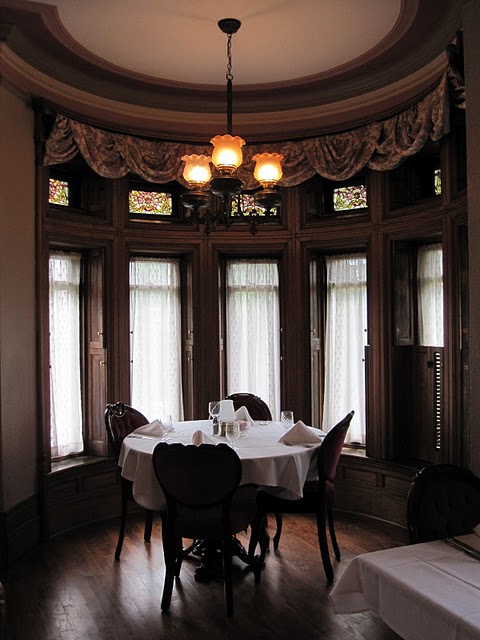
As we travel the state we tend to favor visiting historic homes as points of interest and as such our expectations of the Studebaker Mansion were that of a historic home; In reality there are two perspectives that must be considered when reviewing Tippecanoe Place. The first is the quality and ambiance offered as a unique dinning experience. The second perspective is more obvious, that of a historic home visitation.
In order to tour the home, you must also be dining with Tippecanoe Place. We made lunch reservations in order to keep the cost down, while still being permitted to tour the premises. As we travel we look for ways - like choosing lunch over dinner - as a way to lower our travel costs.
Our favorite two parts of the meal were the beginning and the end. We ordered Tippecanoe Place’s take on Baked Brie. The chef chose to bake it in puff pastry, drizzle it with raspberry sauce, and then plated the brie with sliced green apples and red grapes. Dessert was delicious. We decided to split a large slice of Carrot Cake and it certainly did not disappoint.
In a true juxtaposition to the amazing brie and cake, the entree was far less appetizing. The steak we were served was nearly raw. When brought to the attention of the waitress we were simply informed that that was how Tippecanoe Place prepared their steak. No attempt at resolution was made, in fact the waitress brought someone else’s steak to our table to ‘prove’ to us that ours was properly prepared before serving it to the intended party - who promptly questioned whether it was cooked enough.
Once the residence of the historic influential Studebaker family, we felt that this would be one of the grander stops we would encounter during our Indiana travels.
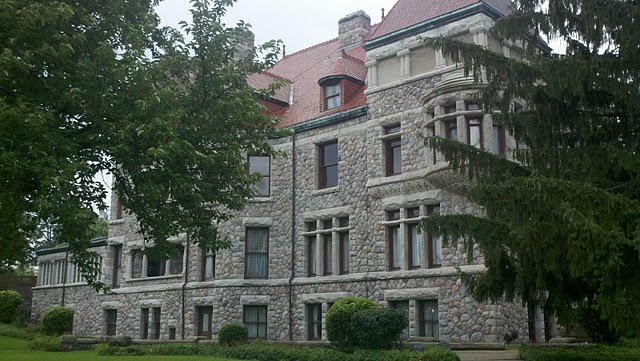
The exterior, and most of the home’s structure, is intact. The home is listed on the National Register of Historic Places as a “Richardsonian Romanesque” home. Indeed you can visually identify the stone massings, recessed entrance, and arches that are commonly associated with this style.
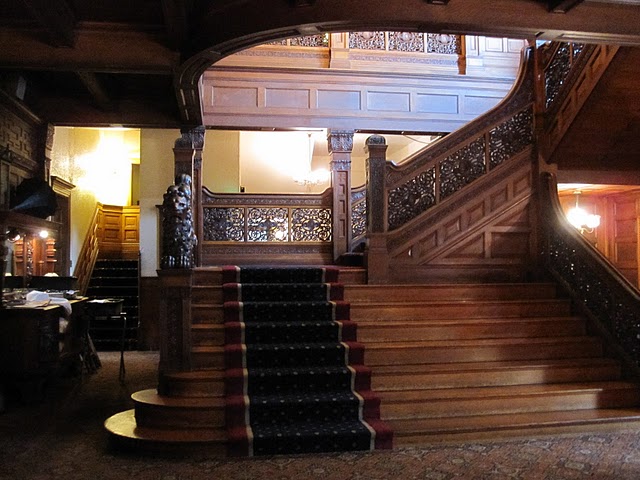
The home has only retained some of the original flourishes that indicate it once existed during a grander time. The exterior of the home is generally as it was built to be, however the interior of the home has been basically gutted for use as a restaurant. Some of the original wordwork, fireplaces, and framing still exist, yet as a historic home visit, this was rather disappointing. An entire room has been walled off and basically destroyed to create a fire-escape allowing the restaurant to serve meals on the fourth floor. According to the staff, the room once contained the most beautiful fireplace of the entire home. How this building is still listed on the National Register of Historic places befuddles us.
While we are confident that the overall experience will excite and thrill some visitors, we were disheartened and frustrated. The dinning experience was good, yet we were heartbroken by the state of the mansion. As a restaurant the wood flourishing and detailed craftsmanship are truly unique. We even tried to understand that a historic society, or a group attempting to maintain a historic building, may need to use the restaurant service as a means for income; however, interior walls have been removed in order to construct a modern bar on the second floor - to us this was the most appalling aspect.
Tippecanoe Place is located within South Bend’s historic district and is only a few blocks away from the new Studebaker Museum. The home has plenty of parking located on property. Simply enter the driveway to start your visit. There is no cost to tour the home, however we recommend that you let your server know at the start of the meal that you intend to tour the mansion, so that they have ample time to provide the self-guided tour pamphlet.
As we are not local residents we have heard of the Studebaker Mansion, however had little to no actual knowledge of it. In attempting to do pre-travel information gathering we were constantly frustrated in our inability to locate the ‘Studebaker Mansion.’ There is little online that correlates the ‘Studebaker Mansion’ and ‘Tippecanoe Place.’ It was only once we called the Studebaker Museum (another stop during our visit in South Bend) that it became clear that the two names were synonymous.
The Studebaker family lost the residence in 1933 due to bankruptcy and for years the building stood unoccupied. In the early 1980’s the mansion began it’s long transition from a once grand forgotten home, into the space that now houses the restaurant known as Tippecanoe Place. Tippecanoe place serves lunch and dinner year-round and is also a favorite venue for special events.
As we travel the state we tend to favor visiting historic homes as points of interest and as such our expectations of the Studebaker Mansion were that of a historic home; In reality there are two perspectives that must be considered when reviewing Tippecanoe Place. The first is the quality and ambiance offered as a unique dinning experience. The second perspective is more obvious, that of a historic home visitation.
In order to tour the home, you must also be dining with Tippecanoe Place. We made lunch reservations in order to keep the cost down, while still being permitted to tour the premises. As we travel we look for ways - like choosing lunch over dinner - as a way to lower our travel costs.
Our favorite two parts of the meal were the beginning and the end. We ordered Tippecanoe Place’s take on Baked Brie. The chef chose to bake it in puff pastry, drizzle it with raspberry sauce, and then plated the brie with sliced green apples and red grapes. Dessert was delicious. We decided to split a large slice of Carrot Cake and it certainly did not disappoint.
In a true juxtaposition to the amazing brie and cake, the entree was far less appetizing. The steak we were served was nearly raw. When brought to the attention of the waitress we were simply informed that that was how Tippecanoe Place prepared their steak. No attempt at resolution was made, in fact the waitress brought someone else’s steak to our table to ‘prove’ to us that ours was properly prepared before serving it to the intended party - who promptly questioned whether it was cooked enough.
Once the residence of the historic influential Studebaker family, we felt that this would be one of the grander stops we would encounter during our Indiana travels.
The exterior, and most of the home’s structure, is intact. The home is listed on the National Register of Historic Places as a “Richardsonian Romanesque” home. Indeed you can visually identify the stone massings, recessed entrance, and arches that are commonly associated with this style.
The home has only retained some of the original flourishes that indicate it once existed during a grander time. The exterior of the home is generally as it was built to be, however the interior of the home has been basically gutted for use as a restaurant. Some of the original wordwork, fireplaces, and framing still exist, yet as a historic home visit, this was rather disappointing. An entire room has been walled off and basically destroyed to create a fire-escape allowing the restaurant to serve meals on the fourth floor. According to the staff, the room once contained the most beautiful fireplace of the entire home. How this building is still listed on the National Register of Historic places befuddles us.
While we are confident that the overall experience will excite and thrill some visitors, we were disheartened and frustrated. The dinning experience was good, yet we were heartbroken by the state of the mansion. As a restaurant the wood flourishing and detailed craftsmanship are truly unique. We even tried to understand that a historic society, or a group attempting to maintain a historic building, may need to use the restaurant service as a means for income; however, interior walls have been removed in order to construct a modern bar on the second floor - to us this was the most appalling aspect.
Tippecanoe Place is located within South Bend’s historic district and is only a few blocks away from the new Studebaker Museum. The home has plenty of parking located on property. Simply enter the driveway to start your visit. There is no cost to tour the home, however we recommend that you let your server know at the start of the meal that you intend to tour the mansion, so that they have ample time to provide the self-guided tour pamphlet.


